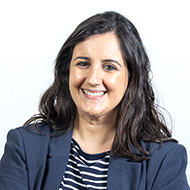
 Prof. Núria López
Institut Català d’Investigació Química (ICIQ) - Spain
Núria López obtained her BSC Chemistry (1995) and her Ph.D. degree in Theoretical Chemistry at the University of Barcelona, Spain (1999). Then she joined the Center for Atomic-scale Materials Physics led by Prof. Jens K. Nørskov (Denmark) as post-doctoral researcher. In 2005 she started her independent career at ICIQ. Her research group focuses on the study heterogeneous photo-electro-catalysis from a theoretical standpoint. In 2010 she was awarded an ERC Starting Grant (2010) and then a ERC Proof-of-concept (2015) by the European Research Council. She was awarded a “Prize for Excellence” by the Real Sociedad Española de Química in 2015 and participated in the consortium that won the RSC’s 2022 John Jeyes Award for sustainability. She has collaborated with several industries in Europe to leverage atomistic modelling, participated in more than 10 EU projects, and served in several committees in the European Union, including the most important supercomputing initiatives in Europe (being Chair of PRACE‘s Steering Committee and INFRAG (EuroHPC-JU)).Prof. López has an h factor of 94 (GS), has published over 300 published articles and has been included in the Highly Cited Clarivate list of 2025 in Chemistry. She is a pioneer in the introduction of open data practices via ioChem-BD, the computational catalysis database developed at ICIQ.
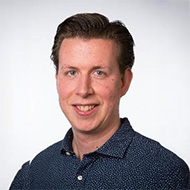 Dr Ruud Kortlever
Delft University of Technology (TU Delft) - Netherlands
Dr Ruud Kortlever is an associate professor at Delft University of Technology (TU Delft) in the Large-Scale Energy Storage section of the Department of Process & Energy. He received his PhD from Leiden University in 2015, working with prof.Dr Marc T.M. Koper on “Selective and efficient electrochemical CO2 reduction on nanostructured catalysts”.
Ruud then spent almost two years working as a postdoctoral fellow at the Joint Center of Artificial Photosynthesis (JCAP) at the California Institute of Technology, with a further focus on electrochemical CO2 reduction. In January 2018 Ruud returned to the Netherlands to start his independent career at Delft University of Technology. His group is interested in electrochemical conversions that are relevant for renewable fuel production and the electrification of the chemical industry. The group currently focuses on developing new electrocatalytic systems and devices for water electrolysis, CO2 electrolysis and electrocarboxylation, and electrochemical ammonia and urea production.
 Dr Hui Luo
University of Surrey - United Kingdom
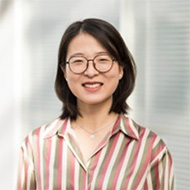
Dr Hui Luo (MRSC, MIMMM, FHEA) is an RAEng research fellow in the School of Engineering, and part of the Surrey Circular Economy Group at the University of Surrey. She obtained her PhD in materials science from Queen Mary University of London in 2019, working on carbon materials for solar hydrogen conversion. Her PhD thesis was awarded 3rd place in the Royal Society of Chemistry PhD Thesis Award in Energy Sector. In Oct 2019 she moved to Imperial College London working as a research associate, developing biomass electrolyser for green hydrogen and bio-chemical co-production. In Sep 2022 she worked as a senior test engineering at Ceres, before join Surrey in May 2023. She leads the Catalysis for Chemical Circularity group (C4CC), and her research interests include developing and up-scaling efficient mechanocatalytic and electrolysis technologies to convert biomass and plastic wastes into green hydrogen and high-value commodity chemicals.
 Prof. Dr F. Pelayo García de Arquer
Institut de Ciències Fotòniques (ICFO) - Spain
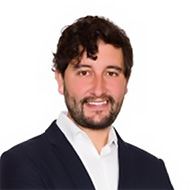
Dr Pelayo García de Arquer earned his PhD from ICFO, during which he investigated how the interaction between nanostructured semiconductors and metals could be manipulated dictating key optoelectronic properties such as absorption, charge transport and doping.
He joined the University of Toronto as a Connaught Postdoctoral Fellow in Bioinspired Ideas for Sustainable Energy. In his postdoctoral work, he expanded his research in the field of clean energy. He explored the use of emerging liquid-processed materials such as perovskites, low dimensional perovskites, quantum dots, and their combination, to control energy transfer at the nanoscale. Soon, he turned his attention to energy storage based on hydrogen and CO2 electroreduction. In this area, he advanced in the understanding and performance of catalysts for these reactions, offering new insights into their design considering material transformations, and gas, electron and ion management.
At ICFO, García de Arquer established a research program focusing on CO2 Mitigation Accelerated by Photons (CO2MAP). His group explore the conversion of CO2 into renewable fuels and commodities using clean energy. This has the potential to reduce the massive carbon footprint of existing manufacturing and transport processes.