Leaders

-- Thursday, 08 January 2026

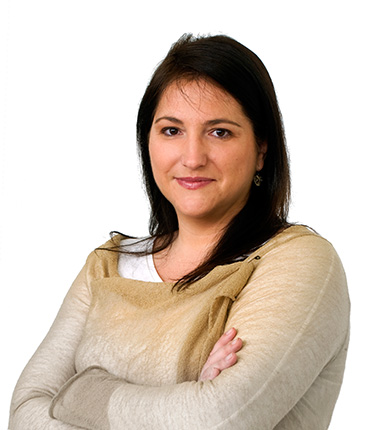
Jordi Sort Viñas

Prof. Jordi Sort received his PhD in Materials Science from the Universitat Autònoma de Barcelona (UAB) in 2002 (Extraordinary Award), with a dissertation on magnetic exchange interactions in ferromagnetic–antiferromagnetic systems. He carried out postdoctoral research at the SPINTEC Laboratory (Grenoble) and Argonne National Laboratory (USA), and long secondments at the Grenoble High Magnetic Fields Laboratory, and Los Alamos National Laboratory. He leads the Nanomaterials for Advanced Memory and Computing Group at ICN2, where novel nanoscale-material-based memory and computing concepts with enhanced write/read energy efficiency are developed, and the Smart Nanoengineered Materials, Nanomechanics and Nanomagnetism Group at UAB, focused on fundamental advances in the magnetic, magnetoelectric, and nanomechanical properties of materials that go beyond the state of the art.
-- Thursday, 13 March 2025

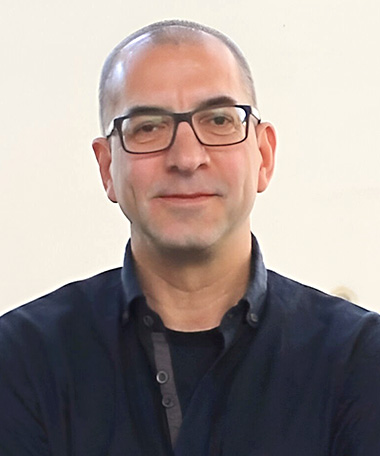
Neus G. Bastús

Dr Neus G. Bastús is a physicist with a strong interdisciplinary focus on materials chemistry. She completed her BSc in Physics at the Universitat de Barcelona (UB) in 2003 and obtained a PhD in Physics in December 2008, specializing in the synthesis and functionalization of metal nanoparticles for biomedical applications. In 2009, she joined the University of Hamburg for postdoctoral research under the supervision of Prof. Horst Weller, supported by a Beatriu de Pinos Fellowship (AGAUR, Catalan Government). During this period, she expanded her expertise to the synthesis of semiconductor nanocrystals and hybrid nanostructures for energy harvesting and catalysis. In 2011, she was awarded a Juan de la Cierva Fellowship, followed by a Marie Curie Career Integration Grant. In 2013, she secured a Ramón y Cajal contract, ranking first in the Materials Science Area. Through this position, she established her main research line at the Inorganic Nanoparticles Group at ICN2, focusing on the colloidal synthesis of advanced complex inorganic nanocrystals via wet-chemistry routes. Since 2022, she is a CSIC research scientist at ICN2. She is a member of CIBER-BBN and chairs the ICN2 Equal Opportunities Committee, leading initiatives to promote diversity and inclusion in science.

-- Friday, 18 December 2015

Neus Domingo

Dr Neus Domingo obtained her degree in physics and her PhD at the University of Barcelona in 2000 and 2005 respectively. Later on, she joined the Istituto di Struttura della Materia (CNR) in Rome, Italy (2005-2007). In 2008, she started working at the CIN2 as a Juan de la Cierva Researcher and in 2011 she became a member of the ON group holding a Ramon y Cajal Research Grant.

Dr Domingo can count on a strong materials science background, spanning from molecular magnetism and nanoparticles to piezo- and ferro-electricity and nanoscale electromechanical phenomena, with special emphasis on surface science. She considers herself a nanotechnologist and an AFM enthusiastic. Her current research interest lies in the field of scanning probe microscopy of functional materials and ferroics, and physical chemistry of ferroelectric surfaces.

-- Friday, 18 December 2015

Nikos Kehagias

Dr Nikolaos Kehagias graduated from the Physics department of Aristotle University in Thessaloniki, Greece in 2002. He has a Master degree in “Physics of laser communications” from Essex University, UK. He obtained his PhD in 2007 from the National university of Ireland, Cork where he continued to work as a post doctoral fellow until May 2008.

He joined the ICN in May 2008, first as member of the Phononic and Photonic Nanostructures Group. In 2010 he became Division Leader of the Nanofabrication Division and since 2014 he leads the Flexible Nanofabrication Platfom.

-- Thursday, 10 December 2015

Jose Antonio Garrido

Jose A. Garrido is an ICREA Research Professor and leader of the ICN2 Advanced Electronic Materials and Devices Group, which explores novel electronic materials, such as graphene and other 2D materials, and their potential in electronic and bioelectronic applications.

He received his Master’s and PhD degrees in Telecommunication Engineering from the Universidad Politécnica de Madrid in 1996 and 2000, respectively. From 2001 to 2004 he worked as a postdoc at the Walter Schottky Institute, Technische Universität München (Germany). He obtained his habilitation in experimental physics at this university in 2010 and from 2011 to 2015 held a lecturer (Privatdozent) position at its Department of Physics.

In 2015 Jose A. Garrido joined the ICN2 where, in addition to his role as Group Leader, he is Vice-Director. He is the coordinator of thei-VISIONproject funded byLa Caixa Foundation, where 5 institutions join forces in the development of a retinal implant to restore vision. Since October 2022, he has also coordinated the EIC Pathfinder MINIGRAPH project, in which 7 institutions from 5 countries work together to develop and validate a new generation of brain implants with closed-loop neuromodulation capabilities enabled by high-density arrays of graphene microelectrodes.