

Nanomaterials for Advanced Memory and Computing
Group Leader: Jordi Sort Viñas
Main Research Lines
-
Novel nanoscale-material-based memory concepts with improved write/read energy efficiency.
-
Beyond binary storage: multi-level memory, probabilistic p-bits and analog memory architectures.
-
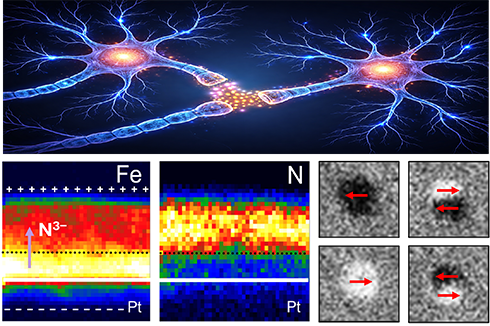
Iontronics–magnetism convergence: magneto-ionic nanomaterials and device platforms.
-
In-memory physical computing that co-locates data storage and processing (brain-inspired).
-
Unconventional computing paradigms, including stochastic, neuromorphic and probabilistic computing.
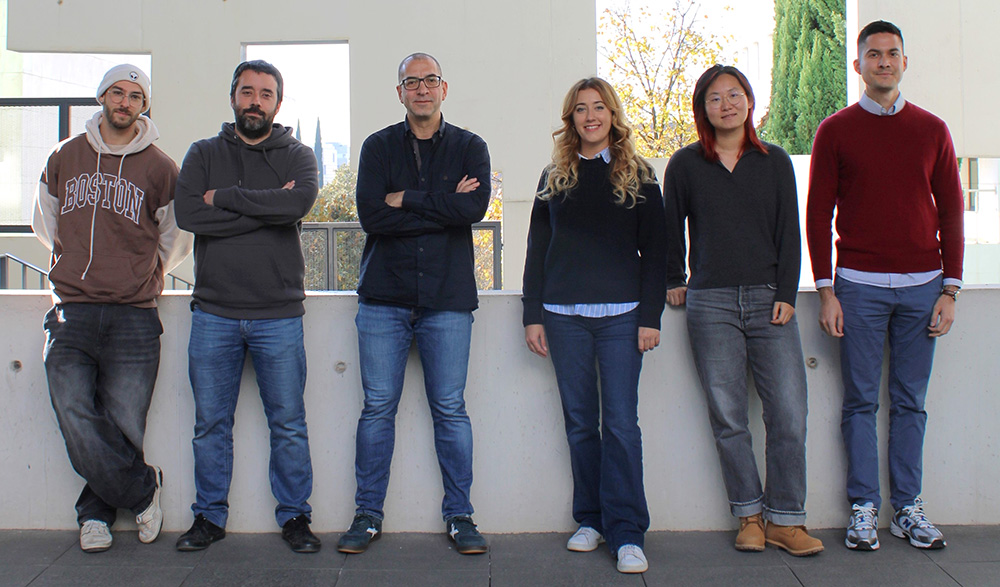
Created in 2025 and led by ICREA Research Prof. Jordi Sort, this group aims to explore advanced brain-inspired memory and computing concepts based on the use of nanoscale materials. The rapid growth of data-centric technologies and artificial intelligence has created a strong global demand for novel memory and computing paradigms that go beyond conventional von Neumann architectures, motivating the development of materials and devices capable of storing and processing information in a more energy-efficient, adaptive, and brain-inspired manner.
The research carried out by the group focuses on the discovery and control of new memory effects in nanoscale materials, including ferromagnetic, spintronic, and ferroelectric systems, as well as on the implementation of hybrid memory concepts such as light-controlled multiferroics and voltage-driven magnetic memristors. A central objective is to enhance energy efficiency during write and read operations, while moving beyond conventional binary “bits” toward multi-level and analog memory systems that enable richer information encoding.
A major thrust of the group is the development of in-memory and physical computing approaches, where data storage and processing occur simultaneously at the materials level, inspired by the operation of the brain. This includes research on unconventional computing paradigms, such as neuromorphic, stochastic, reservoir and probabilistic computing, and on the physical realization of probabilistic p-bits, laying the groundwork for future quantum-inspired computing concepts. Frontier research lines address the merging of iontronics with magnetism through magneto-ionic nanomaterials and devices, as well as efforts to bridge artificial and natural memory, linking fundamental materials science with next-generation computing architectures.
Group Leader

Jordi Sort Viñas
ICREA Research Professor and Senior Group Leader
jordi.sort@icn2.cat
Prof. Jordi Sort received his PhD in Materials Science from the Universitat Autònoma de Barcelona (UAB) in 2002 (Extraordinary Award), with a dissertation on magnetic exchange interactions in ferromagnetic–antiferromagnetic systems. He carried out postdoctoral research at the SPINTEC Laboratory (Grenoble) and Argonne National Laboratory (USA), and long secondments at the Grenoble High Magnetic Fields Laboratory, and Los Alamos National Laboratory. He leads the Nanomaterials for Advanced Memory and Computing Group at ICN2, where novel nanoscale-material-based memory and computing concepts with enhanced write/read energy efficiency are developed, and the Smart Nanoengineered Materials, Nanomechanics and Nanomagnetism Group at UAB, focused on fundamental advances in the magnetic, magnetoelectric, and nanomechanical properties of materials that go beyond the state of the art.