Severo Ochoa Programme 2018-2022 NEWS
Thursday, 31 January 2019
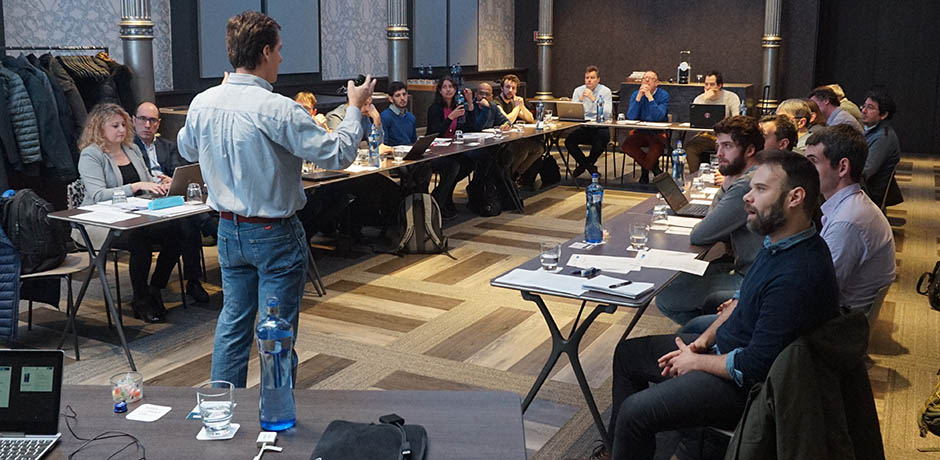
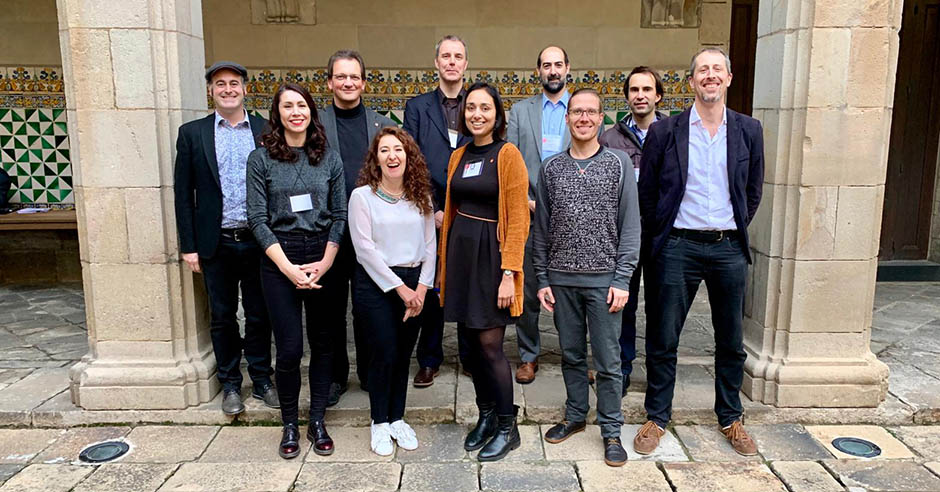
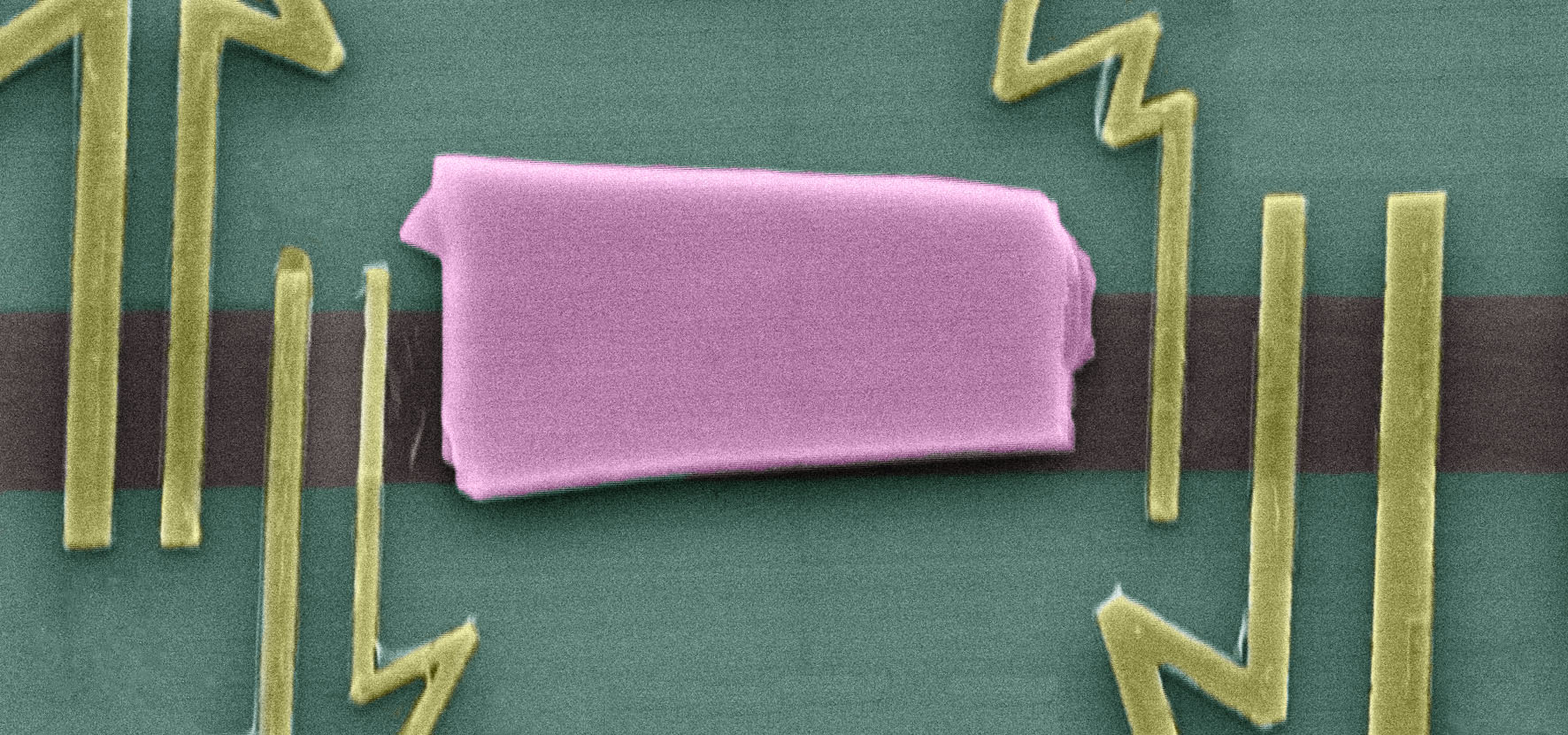
The European Project TOCHA, launched today through a kick-off meeting in Barcelona, proposes radically new technologies taking advantage of the unique properties of topological matter that can prove crucial for information processing, quantum communication and metrology. TOCHA is funded with 5 Million Euros for the next five years and is coordinated by the ICN2.
Tuesday, 29 January 2019
The roadmap highlights medium to long term recommendations for strengthening the European competitiveness in this domain, opening the doors to many new markets. ICREA Prof. Dr Clivia Sotomayor-Torres, Group Leader of the ICN2 Phononic and Photonic Nanostructures Group, acted as contributing author of the document and coordinated the chapter “Beyond CMOS”, which reflects contributions by other ICN2 researchers.
Tuesday, 22 January 2019
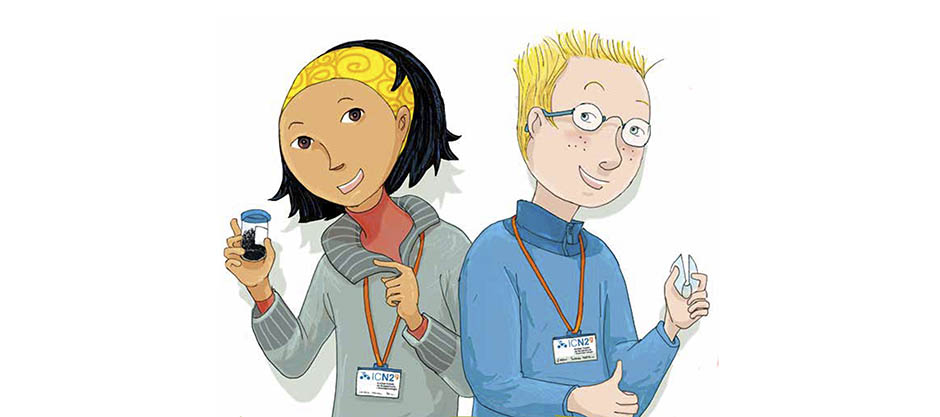
The General Directorate for Research (Ministry of Business and Knowledge, Government of Catalonia) has launched a new “Laura and Joan” storybook to bring science closer to young students. The young protagonists of this series visit the ICN2 to learn about graphene, energy and technology transference.
Monday, 21 January 2019
A work published in Advanced Materials describes a new carbon nanomaterial which provides a double profits strategy such as battery‐level energy and capacitor‐level power density. Among the authors are researchers from the ICN2 Novel Energy-Oriented Materials Group, led by Prof. Pedro Gomez-Romero.
Friday, 18 January 2019
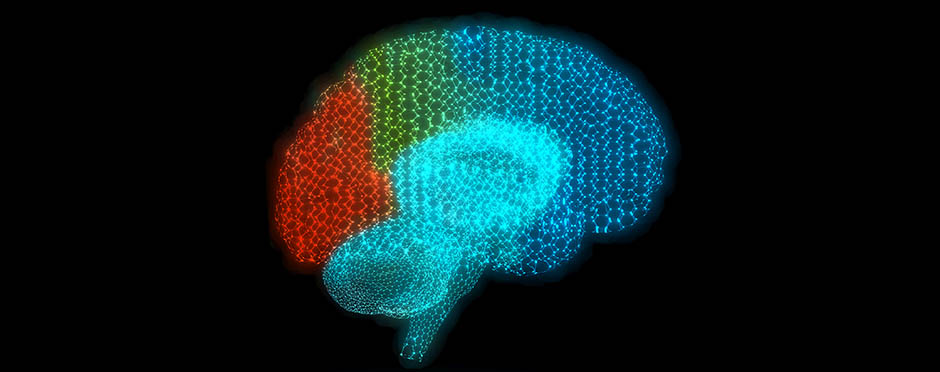
The year 2019 started with a work in Nature Materials describing how researchers in Barcelona have developed a graphene-based implant able to record electrical activity in the brain at extremely low frequencies and over large areas. This work led by the ICN2 and the IMB-CNM, CSIC was also participated by IDIBAPS, CIBER-BBN and ICFO.
Wednesday, 02 January 2019
Researchers in Barcelona have developed a graphene-based implant able to record electrical activity in the brain at extremely low frequencies and over large areas, unlocking the wealth of information found below 0.1 Hz. The prototype was developed at the Barcelona Microelectronics Institute (IMB-CNM, CSIC) and the Catalan Institute of Nanoscience and Nanotechnology (ICN2, a BIST and CSIC centre), and was adapted for brain recordings in collaboration with the August Pi i Sunyer Biomedical Research Institute (IDIBAPS). Published in Nature Materials, the groundbreaking technology promises to enhance our understanding of the brain and pave the way for the next generation of brain-computer interfaces.
Thursday, 27 December 2018
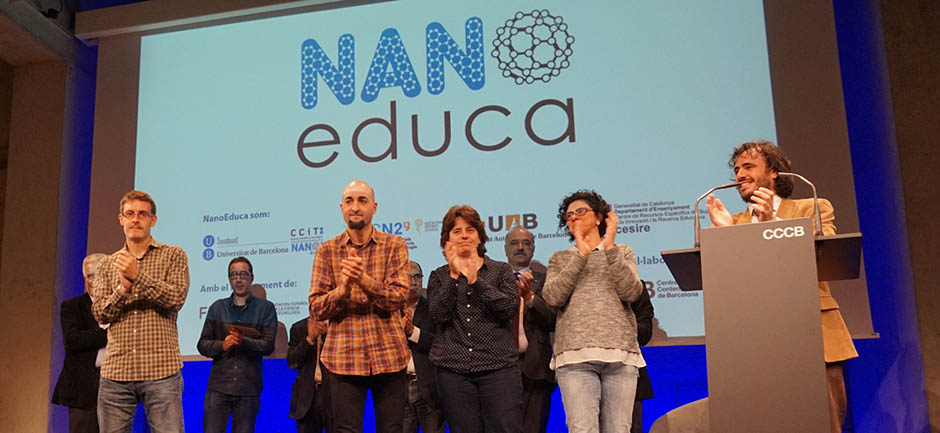
The NanoEduca program, promoted by UB, the ICN2, UAB and the CESIRE of the Department of Education the Generalitat de Catalunya, comprises three complementary lines of action: Nanokit (pedagogical suitcases available for free), teacher training, and an annual poster and video competition.
Friday, 21 December 2018
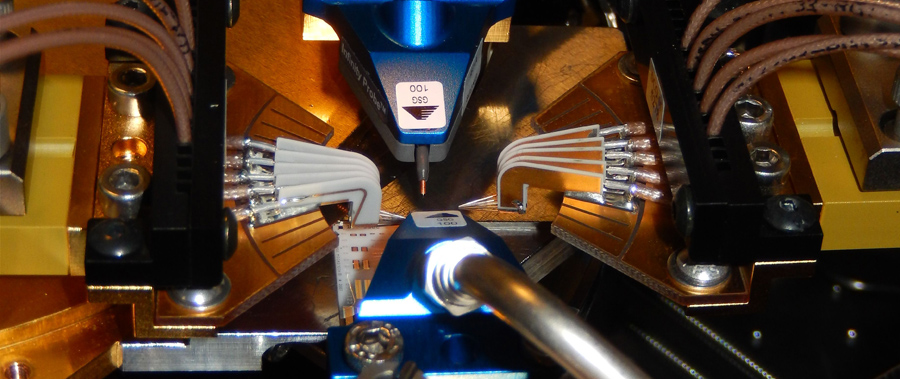
ICN2 researchers published in ACS Sensors an affordable method for bacteria detection useful for hospital on-site testing and as a clinical point-of-care (PoC) device. Real patient samples were analysed in a hospital setting using a simple one-step process with sample-to-data turnaround time of 40 min. The work was developed within the H2020 European project RAIS.
Tuesday, 18 December 2018
The second such overview by Prof. Eden Morales-Narváez and ICREA Prof. Arben Merkoçi for Advanced Materials, this update presents the new challenges and opportunities facing researchers in this exciting field.
Friday, 14 December 2018
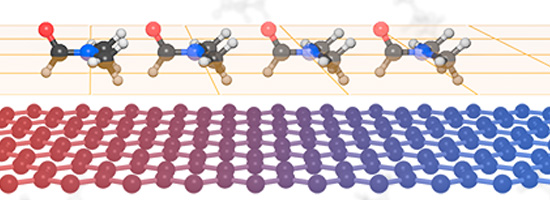
Readers of the journal of the American Chemical Society have voted this graphene membrane with pores controlled at the atomic scale as the best molecule of 2018. The material was presented in Science in a joint article by researchers from the ICN2, CiQUS and DIPC.
Thursday, 13 December 2018
Dr Zeila Zanolli of the ICN2 Theory and Simulation Group was elected member of the board (as treasurer) of the Young Academy of Europe at the 2018 Annual General Assembly, held this year in Barcelona on 28 and 29 November.
Friday, 30 November 2018
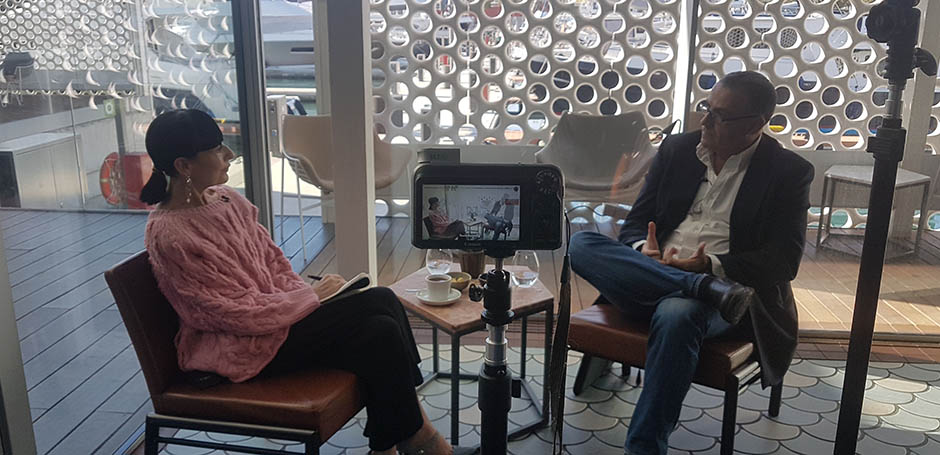
Watch the whole interview to learn more about the research lines led by the ICN2 Nanostructured Functional Materials Group and their impact in our lives.
Thursday, 29 November 2018
The thesis, defended by Dr Jackeline Narvaez Morales on February 29 2016, was entitled Flexoelectricity in Single Crystals. It was directed by ICREA Research Professor Gustau Catalán, head of the ICN2 Oxide Nanoelectronics Group, and Dr Neus Domingo, Senior Researcher from the same Group.
Wednesday, 28 November 2018
Graphene Flagship researchers including from the ICN2 have shown in a paper published in Science Advances how heterostructures built from graphene and topological insulators have strong, proximity induced spin-orbit coupling which can form the basis of novel information processing technologies.
Monday, 26 November 2018
Researchers from CSIC, ICN2 and CIBER-BBN have designed a biosensor device based on gold nanostructures that precisely detects the presence of anticoagulant drug from a small blood sample. Treatments with anticoagulants such as Sintrom® (acenocoumarol) face the difficulty of adjusting the drug doses. This device will allow patients to self-regulate the dose.
Monday, 19 November 2018
As we advanced last July, the ICN2 is among the five centres and seven units to be recognised in this round of Severo Ochoa and María de Maeztu awards, renewing our status as a national centre of excellence.
Friday, 02 November 2018
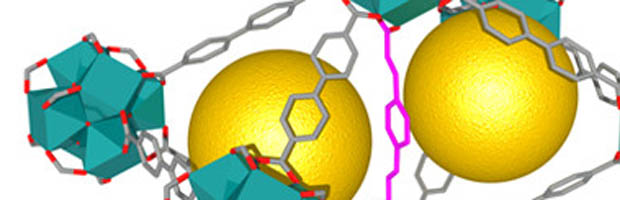
Work by the ICN2 Supramolecular NanoChemistry and Materials Group to widen the pores in metal-organic frameworks (MOFs) has been featured in the American Chemical Society's Chemical & Engineering News magazine.
Tuesday, 30 October 2018
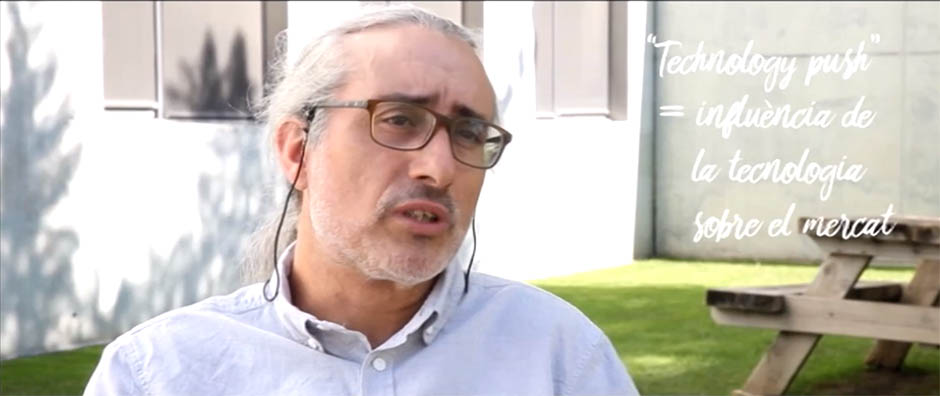
Jordi Reverter speaks about success stories involving technologies developed at the ICN2 and encourages local companies to contact the ICN2 Business and Innovation team.
Wednesday, 24 October 2018
Disperse graphene in a suitable solvent and the resulting nanofluid will have much better thermal properties than the original liquid. Three ICN2 research groups collaborate to describe and explain this effect from the inside out. The results, published in the Royal Society of Chemistry’s Nanoscale, provide a comprehensive analysis that alternately rules out and lends support to different existing theories as to the mechanisms driving the enhanced thermal conductivity and heat exchange found in nanofluids, bringing considerable insight into the field of thermal transport in dynamic systems.
Monday, 01 October 2018
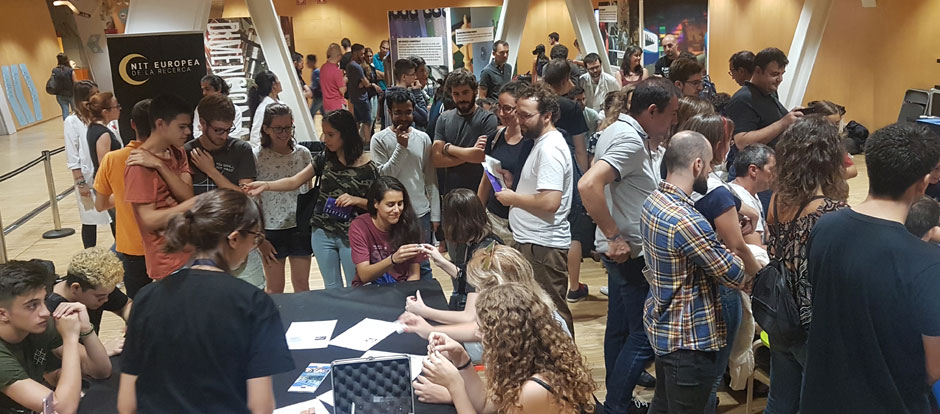
The European Researchers’ Night is a Europe-wide effort to boosts public awareness of the positive role of research in society. This year’s program included a series of events at CosmoCaixa, with a specific area devoted to nanoscience and nanotechnology. Many coordinated institutions, including the ICN2, made it possible.